Sunday, May 9, 2010

Of Wolves and Men

Barry Lopez’s Of Wolves and Men was a National Book Award finalist when it was first published in 1978, and this book has come to exemplify the author’s truly interdisciplinary style: his works deftly fuse literary acumen with ecological awareness and ethnography. Of Wolves and Men is not just about wolves, but about how little is actually known about wolves—in other words, Lopez is interested in the mythologies that circulate around wolves. And, of course, humans are the creators of mythologies, so the book is just as much about humans. The book is also about how humans visualize wolves: Lopez’s writing is woven around visual culture, from historical photographs, to an Eskimo print of wolves eating a caribou (84), to illustrations of the wolf and the crane attached to the eponymous Aesopian fable (260).

Lopez introduces his book by placing the act of writing in the foreground, and thereby seeking to embed the reader in a detailed (if also entirely mediated) environment:
I am in a small cabin outside Fairbanks, Alaska, as I write these words. The cold sits down like iron here, and the long hours of winder darkness cause us to leave a light on most of the day. Outside, at thirty below, wood for the stove literally pops apart at the touch of the ax. I can see out across the short timber of the taiga when I am out there in the gray daylight. (1)

This is a prime example of what the literary scholar Timothy Morton calls “ecomimesis,” or when environmental writing attempts to “break the spell of language” and “go beyond the aesthetic dimension” (30–31). Lopez is calling on his readers to get into a scene—or as his next sentence puts it, “Go out there” (1). The ‘there’ in this sentence is both the Alaskan terrain and the inside of the book, a landscape of the mind. Lopez acknowledges a distance from his subject (he is writing here, not looking at wolves) precisely in order to achieve “a sense of the surrounding environment, not by being less artful, but more so” (Morton, 31). This is a common tactic throughout Of Wolves and Men, by which Lopez reminds his readers that, finally, the real environment of this text is not the behaviors and habitats of wolves, but rather the (un)knowing human mind in relation to all things wolves. As Lopez writes: “…in the wolf we have not so much an animal that we have always known as one that we have consistently imagined” (204).

Thus Lopez starts the first chapter with a visual directive to the reader: “Imagine a wolf moving though the northern woods…” (9). The following paragraph goes on to flesh out this imaginary scene, and the sentences are rife with figurative language: “The wolf’s body, from neck to hips, appears to float over the long, almost spindly legs and the flicker of wrists, a bicycling drift through the trees, reminiscent of the movement of water or of shadows” (9). The third paragraph, however, strikes a quite different note, scientific and declarative: “The wolf is three years old. A male. He is of the subspecies occidentalis, and the trees he is moving among are spruce and subalpine fir on the eastern slope of the Rockies in northern Canada (10). This type of stylistic shift is characteristic of how the environmental critic Lawrence Buell has described Lopez, as a “roaming” ethnographer, “gleaning insights more from interdisciplinary study and place-based informants…than from staying put” (69). Of Wolves and Men follows an indeterminate yet cumulative pattern of roaming between personal narratives, rumors, pictures, field accounts, and observations. This methodology allows Lopez to draw something of an open perimeter around his subject, which he defines as “a variable creature” (83).

The literary scholar Susan Kollin has shown how “…Lopez dismantles notions of Alaska as a pastoral or wilderness retreat, a place somehow cut off from the rest of the United States or the world” (46). So while certain passages from Of Wolves and Men linger on classic environmental imagery and specific ecosystems, the book continually shifts ground, requiring the reader to recalibrate and come to terms with outlying horizons of knowledge and experience. Indeed, Of Wolves and Men focuses on the lore and legends of wolves in order to expand a general sense of consciousness about how humans, in Lopez’s words, “…struggle to come to grips with the nature of the universe” (204). The scope of this book is at once narrowly focused on wolves, and almost endlessly expansive.

In one section Lopez explains a social phenomenon between wolves and ravens: ravens will often follow wolf tracks in order to discover (and clean up) fresh kills. In the next few paragraphs, Lopez follows this ecological dynamic into the realm of play, and relates stories of how ravens and wolves have been observed to tease one another and engage in games of tag, for fun (67–68). Such a move from scientific documentation to fanciful speculation is a signature feature of Lopez’s writing.

As Peter Wild writes in his book on Lopez, “Of Wolves and Men, founded on the premise that men have created varying concepts of wolves, tells perhaps more about the human psyche than it does about the physical wolf loping along in isolation through the centuries” (26). Of Wolves and Men appears to have a fairly traditional ‘environmental’ subject, yet there are ways in which this book can be understood to have anticipated contemporary intersections between critical theory and environmental studies, such as recent discussions of the human–animal conjunction (e.g. Agamben, Derrida, Haraway, & Wolfe). Near the end of the book, Lopez writes:
I think, as the twentieth century comes to a close, that we are coming to an understanding of animals different from the one that has guided us for the past three hundred years. We have begun to see again, as our primitive ancestors did, that animals are neither imperfect imitations of men nor machines that can be described entirely in terms of endocrine secretions and neural impulses. Like us, they are genetically variable, and both species and the individual are capable of unprecedented behavior. They are like us in the sense that we can figuratively talk of them as beings some of whose forms, movements, activities, and social organizations are analogous, but they are no more literally like us than are trees. (283–284)

This passage shows what the philosophical stakes are for Lopez in taking animality seriously as a subject of investigation; these sentences also demonstrate how, for Lopez, the wolf is both utterly unique and also a metonymy for life at large.

Of Wolves and Men is a hybrid manifesto on behalf of “human inquiry” and against “dogmatic certainty” (285), and its resistance to be strictly defined in terms of any one genre is in part what makes it such a significant environmental literary text. Barry Lopez’s work ranges across diverse subjects and fields of speculation, as one can tell from his more recent short story collections Field Notes and Light Action in the Caribbean. Of Wolves and Men offers an early indicator of how Lopez’s environmental sensibility functions as an elastic point of consciousness: it is both the space between humans and the world, and that which makes the two inseparable.

Bibliography

Agamben, Giorgio. The Open: Man & Animal. Stanford: Stanford UP, 2003.
Buell, Lawrence. The Future of Environmental Criticism: Environmental Crisis and Literary Imagination. Malden, MA: Blackwell, 2005.
Derrida, Jacques. The Animal That Therefore I Am. New York: Fordham UP, 2008.
Haraway, Donna. When Species Meet. Minneapolis: University of Minnesota Press, 2007.
Kollin, Susan. Nature’s State: Imagining Alaska as the Last Frontier. Chapel Hill: University of North Carolina Press, 2001.
Lopez, Barry. Of Wolves and Men. New York: Charles Scribner’s Sons, 1978.
Morton, Timothy. The Ecological Thought. Cambridge: Harvard UP, 2010.
Wild, Peter. Barry Lopez. Boise: Boise State University, 1984.
Wolfe, Cary. “Flesh and Finitude: Thinking Animals in (Post)Humanist Philosophy.” SubStance Issue 117 (Volume 37, Number 3), 2008.

Wednesday, May 5, 2010

Environmental Dimensions of Hemingway

In this post, I wish to discuss the environmental-theoretical significance of Ernest Hemingway (1899–1961). I am using this post as an occasion to redress some of the offhand associations that the name "Hemingway" evokes, and to expand appreciation for how Hemingway's writing might be contextualized in terms of environmental theory.

From his birthplace in Oak Park, Illinois, Ernest Hemingway went on to explore and write about environments all around the world. In 1918 Hemingway volunteered as an ambulance driver for the Red Cross; he was assigned to Italy, where he was wounded by a trench mortar near the front lines. Many of Hemingway’s early works reflect on the horrors of WWI, particularly as these experiences and memories get filtered through a return to familiar rural and domestic American settings. Hemingway’s prose is an icon of Modernism, bringing an acute sense of the art of language to bear on the overwhelming realities of the first half of the 20th-century.

Hemingway wrote about fiestas and guerrilla fighters in Spain (The Sun Also Rises and For Whom the Bell Tolls), Parisian café life (A Moveable Feast), and Caribbean culture in the Florida Keys and Cuba (To Have and Have Not and the posthumously published Islands in the Stream). The author pays close attention to environmental details, regularly lingering on animals, weather, food, and landforms as focal points for his stories. Hemingway spent portions of his childhood in Northern Michigan, and this ecosystem figures heavily in many of his works. For instance, in numerous short stories Hemingway casts his semiautobiographical character Nick Adams at different ages near the shorelines of Lake Michigan, where Nick experiences both epiphanies and existential dread in this glacially formed landscape. The literary scholar Thomas Strychacz has noted how Hemingway’s Northern Michigan scenes rely on concepts of nature inherited from Native Americans as well as from American Transcendentalism (82). Hemingway’s Northern woods serve as spiritual registers even when the characters themselves seem spiritually devoid.

However, beyond mere recapitulations of older traditions, a distinctly Modernist concept of the environment emerges from Hemingway’s oeuvre, as well. For instance, A Moveable Feast begins:
Then there was the bad weather. It would come in one day when the fall was over. We would have to shut the windows in the night against the rain and the cold wind would strip the leaves from the trees in the Place Contrescarpe. The leaves lay sodden in the rain and the wind drove the rain against the big green autobus at the terminal and the Café des Amateurs was crowded and the windows misted over from the heat and the smoke inside. (3)

This passage starts out with clear seasonal imagery involving rainstorms, temperature shifts, and plant life—and then ends in a gritty city with public transit and obscured visibility. In a characteristically Modernist fashion, Hemingway presents a nature that is fragmented and eludes objectification: the natural environment surrounds, flows through, and encompasses human culture, such as in this description of Paris.

Hemingway is often cited for his aura of outdoorsy masculinity, but it is key to understand that he was first and foremost a writer. Hemingway was just as taken (if not more so) with the wildness of words as he was with trout, tigers, and rugged terrain. The Hemingway scholar Peter Hays puts it succinctly as such: “his greatest accomplishment was with language” (137). Where one might assume, then, that the obvious scenes of hiking, fishing, boating, or hunting are what make Hemingway’s works environmentally significant, a subtle and pervasive wilderness also exists for Hemingway at the level of the writing. As the literary theorist Fredric Jameson has shown, the form of Hemingway’s writing complicates what can otherwise seem to be simplistic descriptions of the natural world (408–413). Indeed, Hemingway’s writing is almost always as interested in language itself as it is in whatever subject the writing appears to be about. It is useful therefore to think about Hemingway as a writer who encountered language itself environmentally.

Consider the first sentences of For Whom the Bell Tolls, a novel about the Spanish Civil War:
He lay flat on the brown, pine-needled floor of the forest, his chin on his folded arms, and high overhead the wind blew in the tops of the pine trees. The mountainside sloped gently where he lay; but below it was steep and he could see the dark of the oiled road winding through the pass. There was a stream and the falling water of the dam, white in the summer sunlight.

“Is that the mill?” he asked.

“Yes.” (1)

While upon first glance this novel appears to begin with a relatively simple and elegant depiction of an alpine vista, the words are also extremely self-involved. These sentences pose implicit questions about the most basic qualities of sight, space, sound, and communication. The opening dialogue is somewhat redundant, since the first paragraph reports the mill, and then a nameless “he” rhetorically questions this report, only to be reassured “Yes”—it is really the mill. Language is working overtime to set the scene: the word “mill” points at the setting of the novel as well as at the very words used to tell the story. Such meditations on language and perception are a constant preoccupation in Hemingway’s works, and are often evinced through sheer repetition. When Hemingway repeats words or sentences, he is calling attention to the medium of language. This intense sense of one’s artistic material is not only indicative of high Modernist aesthetics (related to how cubists worked to foreground the two-dimensionality of paintings), but it also signals an awareness of how the environment and language are entangled. Actual pine needles have feeling against the skin similar to how the alliterative words ”summer sunlight” appear to the mind’s eye or sound to the ear. Hemingway’s writing fixates on irreducible thresholds between the external world and the human mind, and in this regard the works are key environmental literary texts.

Another compelling environmental aspect of Hemingway’s writings is how his style is often described through recourse to a natural metaphor: the “iceberg” theory. Hemingway considered that as only the ‘tip’ or 1/8 of an iceberg is exposed above the surface of water, likewise writing should not reveal everything, but should only express the bare-minimum of action, dialogue, and plot. Meanwhile, the remaining 7/8, the bulk of thought, feeling, and emotion remains hidden under the surface of the text (c.f. Death In the Afternoon, 192). This schema imagines language itself as a kind of environment: a cold, deep sea in which massive icebergs drift, poking out from the page but hiding a lot, too. Such a framework posits an extra layer of environmental imagery on top of the content of writing. According to the iceberg theory, acts of writing are reflections of an arctic phenomenon, no matter what a story is about.

For example, The Sun Also Rises catalogues a seemingly endless series of drunken parties and inane conversations among American expatriates in Europe. But this is merely the tip of the iceberg; an accumulation under the surface of the words is made up of the exorbitant violence of WWI, a sense of despair at the futility of so-called ‘progress’, and general cynicism concerning the viability of romantic love in the modern world. At one point in the novel, when the main character Jake and his friend Bill are headed on a fishing excursion in the hills near the Basque town of Burguete, Hemingway provides the following account of their walk, a strong example of classic environmental imagery:
It was a beech wood and the trees were very old. Their roots bulked above the ground and the branches were twisted. We walked on the road between the thick trunks of the old beeches and the sunlight came through the leaves in light patches on the grass. The trees were big, and the foliage was thick but it was not gloomy. There was no undergrowth, only the smooth grass, very green and fresh, and the big gray trees well spaced as though it were a park.

“This is country,” Bill said. (122)

Just before this passage the two had been bantering playfully—but when Bill mentioned Jake’s war wound, the conversation was shut down. The novel transitions into a picturesque landscape scene as a way to avoid Jake’s inner-subjective quagmires; this avoidance is reflected in Hemingway’s use of apophasis, or the rhetoical technique of mentioning of things claimed to be not present (no gloominess, no undergrowth), drawing the reader’s attention to these things while also claiming that they are absent. Bill’s understated pronouncement that what surrounds them “is country” marks the dialogic iceberg’s suggestive tip. There is a lot left unsaid: a critical mass concealed and congealed beneath a surface of words that deflects our attention to a spectacular (but incidental) forest. The iceberg theory reveals the operative environment to be not just in the greenery of this passage but also how it functions: the verdant description suggests a vast and looming world of things, only some of which can be glimpsed through words.

Hemingway’s works are highly sophisticated in terms of their environmental aesthetics. Hemingway was obviously enthralled by landscapes and animals, but it is essential to realize that language itself was just as captivating to the writer, and just as wild.


Bibliography

Hays, Peter. Ernest Hemingway. New York: Continuum, 1990.
Hemingway, Ernest. A Moveable Feast. New York: Scribner, 1964.
---------. Death In the Afternoon. New York: Scribner, 1932.
---------. For Whom the Bell Tolls. New York: Scribner, 1940.
---------. The Sun Also Rises. New York: Scribner, 1926.
Jameson, Fredric. Marxism and Form. Princeton, NJ: Princeton UP, 1971.
Strychacz, Thomas. “In Our Time, Out of Season.” The Cambridge Companion to Ernest Hemingway. Ed. Scott Donaldson. Cambridge: Cambridge UP, 1996.

Thursday, April 15, 2010

Nothing Beside Remains

I presented a version of the following essay at the American Comparative Literature Association conference on April 3 2010, on a panel called "Cosmopolitan SciFi: Reevaluating the Urban through Technology & Culture."

* * *

In Cormac McCarthy’s post-apocalyptic novel The Road, the world is in tatters and ruins. The remains of an advanced civil society are visible in rare Coke cans, wobbly-wheeled grocery carts, occasional jars of food, and a skein of empty roads, bridges, and streets that wend through the blasted terrain. The Road is not a science fiction allegory of a world like ours; rather, this novel is a gloomy prediction of a future to come that is very much grounded in our present. In this essay I consider what remains within the post-apocalyptic landscape of The Road. By focusing on what remains in the bleak and near future-scape, I argue that we can better understand how the present functions as a repository for a certain kind of apocalypticism.

Early in the novel, the man and the boy trudging "south" encounter an abandoned supermarket with “a few old cars in the trashstrewn parking lot” (22). This is a standard landscape setting for the novel, and the pervasive emptiness of the geography causes the remains to appear in stark relief. For example, in the supermarket the man makes a precious discovery:
By the door were two softdrink machines that had been tilted over into the floor and opened with a prybar. Coins everywhere in the ash. He sat and ran his hand around in the works of the gutted machines and in the second one it closed over a cold metal cylinder. He withdrew his hand slowly and sat looking at a Coca Cola.
What is it, Papa?
It’s a treat. For you.
What is it?
Here. Sit down.
He slipped the boy’s knapsack straps loose and set the pack on the floor behind him and he put his thumbnail under the aluminum clip on the top of the can and opened it. He leaned his nose to the slight fizz coming from the can and then handed it to the boy. Go ahead, he said.
The boy took the can. It’s bubbly, he said.
Go ahead.
He looked at his father and then tilted the can and drank. He sat there thinking about it. It’s really good, he said. (23)

The narrative buildup to this scene causes the Coke can to be a glistening feature in the overwhelmingly drab topography of the novel. However, the Coke can is hardly a good omen. With its stark singularity and its “slight fizz,” the soda drink functions as a bittersweet reminder of mass production and consumer culture—indeed, in this scene the man and the boy take pleasure in the very sort of object that has tilted humans toward a catastrophic contemporaneity.

When the man and the boy later approach a deserted city, they see “long concrete sweeps of the interstate exchanges like the ruins of a vast funhouse against the distant murk” (24). The roadways here are depicted in a strange hyperbolic form, as they are in fact “ruins”…but not of any “vast funhouse”—unless this “funhouse” is the very Lady Gaga-esque phantasmagoria of neo-liberalism itself, that hyper-serious state that promises privatization, inalienable individuality, and endless accessories. It is precisely this sense of the centered, knowing self that is challenged by what remains in The Road—or in many cases, what no longer remains. At once point, the man is pondering the de-linking taking place between his memory and the world:
The names of birds. Things to eat. Finally the names of things one believed to be true. More fragile than he would have thought. How much was gone already? The sacred idiom shorn of its referents and so of its reality. Drawing down like something trying to preserve heat. In time to wink out forever. (89)

Here, the existence of things is directly tied to their names; when the signifiers go, that means that the ‘reality’ has gone, too. The prediction is not hopeful for a world of things whose idiom has lost its value. Shortly thereafter in the novel, an instance of this occurs such that we can see the process taking place:
He looked at the boy. I’ve got to go for more wood, he said. I’ll be in the neighborhood. Okay?
Where’s the neighborhood.
It just means I wont be far.
Okay. (95)

The word “neighborhood” has lost its meaning for the boy, for whom “neighborhood” means nothing in a landscape of dead wood and charred roads. The idea of the neighborhood remains intact for the man, but the boy contradicts this idea, and shows it to be a mere remnant of thought, no longer remaining as material reality.

In The Road we often see these threshold remains that splinter the distinctions between the mental and physical, thought and things. For instance:
They passed through towns with messages scrawled on the billboards. The billboards had been whited out with thin coats of paint in order to write on them and through the paint could be seen a pale palimpsest of advertisements for goods which no longer existed. (127-128)

The billboards and their layered meanings indicate what the narrative calls “the richness of a vanished world” (139)—this is a fraught richness, a textual surface that is both dense with meaning and but also evacuated, and losing significance everyday. The narrative meanders through this world in a documentary fashion, noting “odd things scattered by the side of the road. Electrical appliances, furniture. Tools” (199). Toward the end of the novel, the scenes continue to degrade, time turning into “days sloughed past uncounted and uncalendared. Along the interstate in the distance long lines of charred and rusting cars. The raw rims of the wheels sitting in a stiff gray sludge of melted rubber, in blackened rings of wire” (273).

At one point along the way, the man and the boy discuss the fate of “the states” and the geophysical tenacity of “the road.” While the state-level governmental systems of the U.S. have collapsed, the road remains with nothing to “uproot” it, at least not “for quite a while,” as the man remarks. This conversation is sparked by a physical arrangement of the roadmap that the man and the boy use to travel south:
The tattered oilcompany roadmap had once been taped together but now it was just sorted into leaves and numbered with crayon in the corners for their assembly. He sorted through the limp pages and spread out those that answered to their location.
We cross a bridge here. It looks to be about eight miles or so. This is the river. Going east. We follow the road here along the eastern slope of the mountains. These are our roads, the black lines on the map. The state roads.
Why are they the state roads?
Because they belong to the states. What used to be called the states.
But there’s not any more states?
No.
What happened to them?
I dont know exactly. That’s a good question.
But the roads are still there.
Yes. For a while.
How long a while?
I dont know. Maybe quite a while. There’s nothing to uproot them so they should be okay for a while.
But there wont be any cars or trucks on them.
No.
Okay. (42-43)

The Road demonstrates how civil society—even in its decline—cannot be disentangled from the ecological baseline of the world. The lack of living roots are as much of an absent force on "the state roads" as the absence of operable "cars or trucks." Likewise, for the man and the boy the icy rains and gray skies are as hostile and looming as the scattered hoards of other people who threaten to rob, kill, and/or eat them. There is a productive ambiguity about the novel in the way that the cause of the apocalyptic shift is kept obscure, thus allowing for the human presence to be the flashpoint for apocalyptic imagery, and also a sort of mere medium through which we understand apocalyptic effects (climate change, food scarcity, unchecked violence, contaminated water, etc.). In other words, the apocalypse has both already occurred in the novel, and is ongoing. The narrative through-line of “the road” accommodates this temporal stutter, serving as a space that remains functional, and yet also registers as an ambience of social breakdown with its noticeable lack of vehicles punctuated by vehicles in various states of decay, such as a wrecked semi-truck on the bridge with its trailer full of dead bodies, or the burnt and hollow cars that mark the edge of a ruined city.

What is utterly unsettling about The Road is that it takes place entirely in a landscape of remains, and posits remaining as a state of being. The novel renders completely obsolescent notions of progress, whether in the geographical sense or in a moral, personal, or governmental sense. Whereas one reading of the novel’s ending highlights a note of hope and possibility for survival, I would like to suggest that the novel undercuts its own teleological promise by being, consistently and throughout, a narrative based on remains: things remain, whether they be human or not, whether humans are able to adapt to remaining conditions, or not.

The question of what remains can be used to map post-apocalyptic science fiction on an axis of things and thoughts that remain—or how such remains usher in different thoughts, different things. We can think about how texts in this genre retain or repurpose things and ideas from the present—or, conversely, how texts empty landscapes of familiar features, and reconfigure the minds of characters. In The Road, not much remains, and what does remain takes on a weathered, dated aura—the novel does not reify the Coke bottle or the burnt out vehicles along the road. Rather, these objects reflect the reality of finitude, and as remains, they facilitate the awareness on behalf of the man and the boy that the Earth will never be as it was. We can take this novel as a precautionary tale, or as a dire prediction. But what I want to linger on is how The Road unravels a landscape very present and real to us. Nothing in the novel is alien or otherworldly, and yet everything is shown to be in a state of ruin. The remains come from us, now. What is different is that their functions, values, and styles have been reduced to nearly a zero-level.

I would like to end by discussing very briefly James Cameron’s recent blockbuster movie Avatar. This film, too, takes place in a terrain of remains, even as it ostensibly envisions a futuristic, distant moon where people are blue and mountains float in the sky. While a wasted Earth is alluded to at one point in the film, what we see on the moon Pandora is a wealth of earthly remains: normal military bases, buzzing command centers, edgy science labs, computer stations, recognizable video recording technologies and familiar machine guns, even nicely pressed men’s clothes on the corporate boss played by Giovanni Ribisi.

The plot of Avatar is supposed to take place 145 years from the present, and yet everything appears eerily the same: in short, everything of the present remains. As if to entirely and ridiculously over-determine this point of present remains, when the smart ecosystem of Pandora decides to revolt against the humans, we even get a rendition of a ubiquitous aviation problematic from our contemporary moment: bird strikes. In the movie, large flying reptiles hurl themselves like martyrs into the warplanes and helicopters of the human army, causing explosions, crashes, and general pandemonium. But we have seen this before, in the images of Captain Sully’s Airbus floating in the Hudson River, and in numerous other stories disseminated since, documenting how birds and planes do not mix. My point here is that even in the most fantastical moment of Avatar—the spiritualized ecosystem of Pandora turning against the machines—it is nevertheless an insistence that what is now, will remain.

The Road, on the other hand, takes place maybe a few years in the future. What remains in The Road are worn out objects and manufactured items kept in meager circulation by a diminishing thread of human agency. The natural world remains, largely in hibernation or in a state of scalded holding. Human agency remains, but The Road suggests that this is on its way out. The Road is far scarier than Avatar, as it does not allegorize or push our fate into a future beyond our present generation. Science fiction texts grapple with the question of remains, but what they do with these remains makes a world of a difference—for reception as well as for ‘meaning’—if meaning still remains at all, which is another pressing question for our contemporary moment.

-----------

Cited: Cormac McCarthy, The Road. New York: Vintage, 2006.

Monday, April 5, 2010

On Myths of the English Degree & Myths in General

Recently I was asked to give a talk to English majors at Loyola about what they can "do" with an English degree. The poster for the event suggested that I would help to "debunk" English degree myths. I used this as a jumping off point for my talk, which is here:

***


I was surprised to see on the poster for this event that it would debunk the “myths of the English degree”—but this got me thinking about my presentation tonight, in which I will suggest a kind of inverted relationship to this standard notion about earning an English degree, and that there are ‘myths’ peculiar to it as a field of study. In short, this is my thesis: it is not the “myths of the English degree” that we should worry about; rather, what we need to think about carefully and critically is the strange way that being an English major seems to produce a unique sort of ontological anxiety: What does it mean to ‘be’ an English major? What will I ‘do’ with the English degree? How useful—or, what I really fear, useless—is this degree? How will I know if I am using my English degree to have a meaningful life?

These types of questions haunt the English major in a distinct way—well, along with the philosophy major, perhaps. Think of Sofia Coppola’s joke about this in her film Lost In Translation, when the bored and aimless Scarlett Johansson explains to Bill Murray that she was a philosophy major, and he says, sarcastically, “I hear there’s a real racket in that.” Or, as another example, in my very first college English class, the professor stood in the front of the class and said “People will always ask you what you can do with an English degree. Here’s what to say: Tell them you can do anything with an English degree.” I don’t remember if that inspired me, or if I thought it was bullshit—but now, at some remove, I wonder why my professor started a Great Books course on this weirdly anxious occupational note? Did this really assist us in our readings of ancient Greek epics and tragedies? Why do we feel the need to carry around these fears of “what we are going to do” after college? And can we dispel such fears at an event such as this one?

Here is part of the problem: it is so ingrained in our culture to think that earning an English or a philosophy degree is a deficiency, a kind of booby prize in the collegiate competition that should result in a buttoned-down practicality called ‘real life’. Or, such degrees are only for misanthropes and agitators—these worries are so culturally ingrained that one finds it difficult to speak concretely about how this problem arises in the first place, not to mention what to do about it.

My hunch is that the “myths of the English degree” are in fact not the myths we need to fixate on. These very myths might even serve a hyper-real function in the first place. Allow me to explain what I mean by this statement, that the “myths of the English degree” function as a hyper-reality.

In his book Simulacra and Simulation, the French philosopher Jean Baudrillard has a brilliant argument about Disneyland, in which he suggests that while we think we know that Disneyland is a fake place, and thereby we can appreciate the reality of society outside the theme park, it is actually something like the reverse that is true. Baudrillard points out that all the processes and experiences of Disneyland are really very familiar to daily life: in the theme park, you purchase tickets to participate in certain events, you stand in line to wait for rides, you interact with people in absurd costumes, and you abide by basic geographic sensibilities that assure you that the rules of Disneyland rely on certain physical boundaries and topographical features (think of Space Mountain, or a plastic “wild river” rapid). While these experiences may be exaggerated in the setting of the theme park, they in fact mimic parts of everyday life: we drive around in cars called the Honda Odyssey, the Ford Focus, or the Toyota Matrix; we wait in line at Starbucks to use a clever credit card to buy a personalized, frothy drink; the person behind the counter at Starbucks wears a little outfit that assures us that we are in a special place, experiencing something real, Italian; we abide by the rules of grassy lawns and sidewalks, overpasses and “scenic views.” Baudrillard argues that whereas we commonly think of Disneyland as fake, and as opposed to the rest of the real world, it would more accurate to say that Disneyland functions as a “hyper-real” site: it is just like the ‘real world’, and even more so, by consolidating everything we know from daily life, and presenting it to us in embellished form. In other words, we require the allegedly fake ridiculousness of Disneyland so that we do not question the ridiculousness of the things and processes in so-called ‘real life’. The myths of Disneyland reproduce and reflect the myths of real life, such that it is incorrect to think that Disneyland is fake: rather, Disneyland is the realm of the hyper-real—it is all the more real because it shows us the reality we’ve constructed around us.

I want to make an analogous claim about the “myths of the English degree.” When people talk in nervous or vapid ways about the English degree, and what you can or cannot ‘do’ with it, they are really articulating a far more widespread anxiety about the possibilities and limits of life in general. The myths of the English degree are the myths of life: that you have to ‘do’ something that you have planned out beforehand; that you have to have certain credentials to act certain ways; that if you don’t know what to do, you will become lost or be a deadbeat, like Jeff Bridges’ “Dude” in The Big Lebowski; that if you ask questions of life, or want to be “different,” you will end up like Dustin Hoffman in The Graduate, having a sordid affair and pissing off your parents. These are some myths in circulation, and they all seem to converge mythically around earning an English degree, and knowing what you are supposed to do with one.

So let’s get to practical matters: at the end of my theorizing, what can you really do with an English degree? Well, this is precisely where theory meets practice: as an English major, you can learn to read well, and think clearly, even when you are confused by the stuff of life. (And in my experience, the more I read and the more I think, the more confusing it all seems.) Luckily, the training you get on the way to an English degree includes reading and thinking about myths. When you seem to encounter mythical territory concerning your major, see what psychological terrain it is reflecting around other degrees, or other ways of life. You really don’t have to worry about what “dream job” you will have, or what your “true calling” in life is: for those are major myths, and ones worth jettisoning or putting in brackets as soon as possible. You might have many jobs in your life, or you may find something that sustains your lifestyle and is tolerable—that can be enough. You may also land a job that is very fulfilling, but this will not keep the myths of life at bay: remember, there are next year’s models of cars to worry about, what you should or should not smell like, where to go on vacation, and what to do when you get there—ironically, the more settled in a job you become, the more myths will present themselves to you in the form of consumer demands. But again, here’s where your English degree can help: read the myths trafficking around you, think about just how mythical they are, and feel unsettled by this vast fiction that we are a part of. I am not advocating nihilism here, but rather suggesting the creative potential that we have as human beings—and urging you to participate in the creativity, as readers, and as writers who write the world. Again: it is not the “myths of the English degree” that you need to worry about—it is the myths of life, all the demands and stresses and pressures that you feel, the unanswered questions that you think you have to answer now...that vague sense that brought you here, tonight. Studying language and literature, we can learn to think about life’s myths, and we can talk & write about these myths clearly, analytically, & poetically—that’s what we can do, and frankly, I find it to be a real relief.

Wednesday, March 24, 2010

class blog posts and academic writing: a theory

A colleague and I were talking recently about how much extra writing (translation: time) blogs take to use seriously as a teaching tool. Often, one ends up writing a comment to a student's post that is as long as (or longer than) the post in question; sometimes, a follow-up student comment then provokes another comment...and suddenly the post and comments start to resemble a lengthy collaborative essay, nearly self-contained.

How does all this writing figure in to one's more formal, research-based academic writing? Perhaps not at all—or maybe just not directly.

Upon first glance, it might appear that this sort of writing would distract from or deplete one's energies from the serious, scholarly writing that one has to do to earn tenure.

Yet my colleague and I have found that our own productivity—especially the ability to simply sit and write, to work on a project—increases dramatically during periods when we are using blogs in class as writing components. Through having to write regularly, thoughtfully, and consciously for an audience of one's students, the writing mechanisms are maintained, and kept flexible; it becomes easier to turn to one's own work and write a new paragraph here, revise an old essay there.

While this conversion is not always clear or distinct in the moment, we do find that writing articulate and detailed comments, each aimed at once toward an individual author and an entire class, our own scholarly writing tends to happen with fewer blocks and less inhibitions.

Monday, January 18, 2010

UP IN THE AIR

Jason Reitman's film adaptation of Walter Kirn's novel UP IN THE AIR treats the subject of flight in two not entirely compatible ways, and these ways can be seen in this promotional still, with the singular George Clooney’s contemplative face in the center foreground, and the Eames Tandem chairs receding endlessly into a terminal background:


1. The movie treats the subject of modern flight as kitsch, such as we see in the close-up shots of Clooney swiveling his rollerbag, sliding his card through the check-in kiosk, going through security with a straight face, etc. The vulgar aesthetics of air travel draw chuckles from a knowing crowd. It is curious that Clooney's character, the exit strategist Ryan Bingham, is held up as someone who reflects the autonomous fantasy of taste (we see him shopping for ties at an airport clothiers, and we note that he has those flexible Nike shoes packed in his bag), and is shown to have his taste entirely defined for him by the whims of airline protocols, airport consumer culture, and corporate rewards programs. The monotonous airport scenes function as an analog to the predictability of the total system at hand—the human becomes passive and numb, an agent of nothing—but still moving at impressive speed. For kitsch to work, we all have to know things are ugly, and then buy them anyway. Imagine the feeling of gratification that passengers will have when they are able to enjoy their kitsch surroundings while also seeing this movie as in-flight entertainment: a circle will be complete, but nothing remarkable will have happened.

2. Flight is also depicted as earnest Romantic material, thus the impossible aerial views (views such as no window seat ever actually affords); the wish image of infinite destinations that appears when Clooney looks up at sprawling departures screens and his eyes flick back and forth; and in the metaphor of "connection" that is at turns lampooned and honored throughout the film. Air travel still maintains the slightest residues of the Romantic, and UP IN THE AIR provides ample examples of how just residual these impulses really are: We know that flying in a commercial airliner does not deliver the god's eye view, and yet we accept the cinematic conceit. We know that flight schedules are anything but unlimited matrices of potential new geographies, and yet the informational screens of arrivals and departures still manage to convey some remnant of discovery. Finally, without kisses at the departure gate, or hugs the moment one steps out of the jet-bridge, and with the airport police keeping you from leaving your car at curbside, we know that airports are no longer the place for sustained emotional 'connections'...and yet, we say sure, we'll watch a movie that tries to keep alive the myths and promises of making a 'connection' in flight.

On this last note, what is it about airports that lend themselves to excessive metaphor? Let us be clear, the idea of "connection" is strictly metaphorical here; come to think of it, I do not recall a single scene in the film in which Clooney actually makes a 'connection'— all his flights appear to be direct flights. The 'connection' in this movie is derived from the energy and aura of airports, but it really takes root in an over-fertilized soil of Hollywood romance mixed with Midwestern sentimentality. But in a general sense, this metaphorical excess is an airport problem. Consider one poster for the film:


Look at the layers of metaphor in this image. The "connection," as I've insisted, is not about the airport. This image is a riff on the scene in which Clooney and his understudy are departing Detroit; they are at the beginning on their trip, not in a 'connecting' airport. "Arriving this December" is a further metaphor, taking airport verbiage ('arrivals') and repurposing it as a marketing campaign for the film. The movie's title is itself a metaphor: the characters are quite obviously on the ground, and 90% of the film occurs there, too. The air facilitates the drama, certainly, but strictly speaking, being up in the air is a metaphor. The singular Boeing 747 in the mid-ground is more of a metonymy for all the American Airlines MD-80s that arc across the screen. Finally, the little bird in the upper right-hand corner of the frame is a cute but utterly unnecessary metaphor. We're in an airport, staring at a jumbo jet; do we really need a little bird to remind us that we are in the atmosphere of flight?

The overdetermined metaphoricity of airports creates a squishy subject, an absorbent material base for narratives—and this is perhaps why the kitsch surfaces and the Romantic residues of airports can be sustained together. In airports, displacement is the rule, everything stands for something else, and conflicting feelings are subsumed in the ether of progress.

Monday, December 28, 2009

Taxiway Views

A little story of mine was in The New York Times last week: "A Night Spent on the Tarmac, With No Complaints." It made an especially nice coincidental pairing with another topic of the moment:


As if on cue, the past few days have offered a series of drab taxiway views that reflect a lingering preoccupation with the bleak drama of air travel, something people seem to crave and yet find revolting at the same time:


Dec. 25, 2009


Dec. 27, 2009

The philosopher Martin Heidegger once described the concept of "standing reserve" by evoking the image of an airliner waiting on the taxiway for takeoff. I wonder if airliners still hold such promise in terms of being able to illustrate philosophical ideas.

The recent headlines in the news and their accompanying taxiway views have led me to imagine a class I would like to teach on the discourse and imagery of the postmodern airliner. Don DeLillo's White Noise would offer an apt point of entry: in one section of the novel, DeLillo writes about a group of passengers who have just barely survived a plane crash. The survivors mill around the airport, unable to quite leave, opting instead to hear their story of near death recounted aloud by one of the haggard passengers. DeLillo writes, “They were not yet ready to disperse, to reinhabit their earthbound bodies, but wanted to linger with their terror, keep it separate and intact for just a while longer...” (91). For DeLillo, the near fatal plane crash throws bare life into stark relief, and yet it is also an experience doomed to be subsumed in a precession of simulacra.

Likewise, the current frenzy around near air disasters seems to reflect an attempt to grasp—only to lose touch with—what admittedly is a difficult subject: namely singular mortality, and all the physical risks and contingencies involved therein. In the monotonous taxiway views and in headlines such as "A ‘Nonserious’ Incident on Same Flight to Detroit," there is a tone of desperation, as if we are trying so hard to locate meaning in a subject that is rapidly losing distinction, its horizons gone gray.

Friday, December 11, 2009

Strange Plane Events

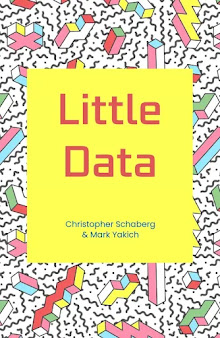
My colleague Mark Yakich and I have posted several excerpts from our current book project on flight. The book is a collaborative travel memoir of sorts that moves between two narratives: Mark's fear of flying, and my experiences working at an airport and becoming obsessed with the oddities of air travel. Our aim is to have this published as a true airport book: compact and easy to read while on the taxiway before takeoff, while in a holding pattern waiting for clearance to land, or while sitting at the gate during an indefinite delay. The idea is that the book can be read in little segments, a story here and a story there, at random—or taken together as a narrative whole, and read more like a novel. The rationale for the material object of the book is for all the times of travel (at an airport, waiting; or on an airplane when lower-tech forms of reading are demanded) when it is preferable to have some 'light reading' ready at hand. So, of course, we envision the book available at airport bookstores.

There was a New Yorker cover a few years ago that offered a utopian vision of airport reading; in a sense, Mark and I are trying to write the kind of book that the fictive passengers in this image might be holding:


In his illustration, Adrian Tomine presents the wish-image of "airport reading." It is a multicultural fantasyland where everyone is at peace, a cosmopolitan dream where instead of shopping, every subject is being enchanted by a book. (For an absurdly dark take on a similar setting, see Roy Kesey's short story "Wait" in the collection All Over.) The silhouetted aircraft in the background of this image hint at the unspectacular banality that jet travel has achieved in our contemporary moment: no one in this imaginary departure lounge seems the least bit in awe of (or afraid of) flying. The blustering snow out the window suggests the environmental limits of flight, similar to a recent USA Today headline that read "Bird risk to jets called a 'flashing beacon'" (so we often find ourselves reading about how flight ends). As the departures monitor displays a uniform stream of DELAYED signs, the passengers all go with the flow, calmly reading their unmarked (and hard-bound!) books. These are Platonic forms of the Book: objects that universally enlighten and make time irrelevant. The airport is a mythic space where time can stand still, but often not in a pleasant way. One might wish that the experience of an airport delay were more like how time flies when one is engrossed in a good book; but usually this is anything but the case.

And so Mark and I are attempting to write a book designed for airport reading, with a bit of double-edged irony, given our inclinations toward writing alternately about the quotidian details of flight and about the horror of airplane crashes. When you really think about it, flying is all the more strange for how plain it has become.

Friday, November 20, 2009

What We Can Learn From Zizek

This past week the philosopher Slavoj Zizek visted Loyola University New Orleans, and I had the chance to spend some time with him over dinner, as well as attend his public talk, "Uses and Misuses of Violence." I want to use this post to reflect on what we can learn from Zizek. This is a practical guide. I am not concerned here with delineating the 'big philosophy' of Zizek's thinking; rather, I am interested in touching on a few ways that I found Zizek's visit useful in relation to my own pedagogical practices.

First, it is necessary to point out the obvious but sometimes ignored reality that Zizek is a public intellectual. This is a difficult role with at times contradictory demands. One the one hand, the public intellectual has to be understood as profoundly intellectual—and accordingly held to certain (shifting) standards. On the other hand, the public intellectual must be clearly public—and therefore utterly accessible and entertaining. This is an extremely difficult (if not outright impossible) balancing act, and we should not too easily dismiss Zizek with regard to one side or the other of this dual role. (Common complaints tend to be "He's too narcissistic and theatrical" or "He's too tangential or sweeping in his references to follow.") The role of the public intellectual is tricky, and yet increasingly important—we should be supportive of such figures, and not get caught in the oppositional role of vulgar critics who can discount personalities (and performances) wholesale. What Zizek teaches us—on a really basic level—is that there is still a lot of hard thinking to do concerning society and culture.

At one point near the end of his talk, Zizek said something very useful about violence: he encouraged his audience to look for violence precisely where it is not perceived. This sounds counter-intuitive—and it is. That is what makes it philosophical and challenging. To look for violence in unexpected places is not a call to mass paranoia, but is rather a matter of "asking the right questions" about situations that seem 'normal'. It is a continual process, not a final judgment. How do we orient ourselves in such a continual process that also demands constant perception and assessment? In one of my current classes, my students and I are discussing this question as appears throughout the apocalyptic novel Parable of the Sower, by Octavia Butler.

Zizek called for a reclaiming of 'civility' and 'decency', which I think surprised many people, as he is hardly ashamed of using perverse anecdotes, obscenities, and graphic illustrations to make his theoretical points. Zizek posed 'civility' against 'habits'—suggesting that sometimes the most 'decent' and 'civil' we can be is to jar ourselves out of habitual modes of thinking (and thus acting). Zizek also advocated to the audience that we need to "change our dreams." This was a very interesting modification of the Marxian premise that the base (actions in the material world) must change the superstructure (thoughts, dreams, consciousness). Perhaps the 'dreams' here are to be understood as somehow more material—as activated settings and scenes, as it were. I found this formulation puzzling but totally intriguing, and I will continue to think about how humans might be able to change their dreams with instantaneous material effects (not simply as a matter of thought).

This point also came up in Zizek's provocation that we "stop saying things that keep everything the same." If there is one simple thing we can learn from Zizek, it is an attention to detail in terms of how we describe things, how we name situations, and what sorts of terms become standard, expected. This may sound all too simple, but it becomes complex, fast—taken seriously, this sort of radical refusal to say things that keep everything the same allows for the unforeseen, indeed possibly the unforeseeable. Taken seriously, too, such a positive refusal can greatly impact the ways we learn, teach, and live. Things cannot and do not stay the same—and when we STOP acting as if things CAN stay the same, this opens up worlds of possibilities. (Zizek is interested in thinking about history as not only what happened in the past, but also in terms of all the things that didn't happen, and for what reasons.) I am completely aware of how naively optimistic this idea of 'stopping-for-the-sake-of-change' may sound. But it is also a real lesson that we cannot help but keep learning. In my other class this semester, my students are grappling with this very issue in Philip K. Dick's novel Time Out of Joint, considering how the characters accept or refuse to accept as-if static material conditions.

So there is my brief synopsis of what we can learn from Zizek. I have written this as an attempt to take the public intellectual seriously, as seriously as he takes himself, certainly—but also (and just as much) as seriously as he takes the world at large. And isn't this intellectual seriousness (or what Donna Haraway calls "serious play") what we try to teach our students, if nothing else?

Tuesday, November 10, 2009

iPhones in the classroom

This is not a post about how annoying it is when phones go off in class, nor about how amazed I am when a student decides to take only one little white earbud out during class, and leave the other one in, softly playing something that only the self can hear. Rather, in this post I want to discuss a few ways in which I have found iPhones to be quite useful in what is mostly an old-school, book-oriented introduction to literary theory classroom.

The other day, we were discussing Simulacra and Science Fiction by Jean Baudrillard, and we were grappling with the concept "pantographic." I said, "Does anyone have a dictionary handy?" No. "How about an iPhone with a dictionary 'app'?" Of course. A tech-savvy student looked up the word, and then we talked about how the epoch of 'hyper-reality' (according to Baudrillard, our age) dispenses with the "pantographic excess" (massive scale shifts) of traditional science fiction (such as we see in imaginary parallel worlds that look eerily similar even when detail are exaggerated or shrunk) in exchange for pervasive models of simulation that have the feel of the 'real'—and iPhone apps turn out to be an apt example of what Baudrillard is referring to. We talked about all the 'real' things that one can now do on an iPhone—such as look up a word in a dictionary, play music, consult a map, identify birds—and considered why none of this seems magical, but rather appears as a simple, natural extension of daily life. The iPhone served as a pedagogical help-aid, and as a quotidian object to be unconcealed in the classroom—we could actually treat it as a living text, through its own access to language.

A week or so later, we were discussing a short story and a student conjectured that the word "torrid" might come from the same word root as the astrological sign of Taurus the bull (we were tracking metaphors of animality in a fictive landscape). This time, I simply said "Who has an iPhone etymology app ready?" And promptly a student was tapping away and informing the class that torrid comes from the Latin torrid-us (to dry with heat).

There are, then, real uses for iPhones in the English classroom. Still, as we move closer to the possibility of full immersion, paperless 'new media' classrooms, there are pressing questions to pose. In the name of online education, one recent blog post that has now disappeared recommended "75 Apps to Turn Your iPhone into the Ultimate Personal Library." The post claimed:
There’s something to be said about the weight of a book in your hand and the feel of the pages, but iPhone apps now give you an option.

I wonder, though, what is this mysterious "something to be said about the weight of a book"? That it is heavy? That it feels nice? And what is the singular "option" that an iPhone phone offers here? It seems caught up in a swarm of exchanges having to do with weight, feel, ease of consumption, access, energy—in other words, a whole world of experiential preferences are assumed when we exchange a book for an iPhone. Perhaps these experiential preferences need to be discussed more directly as such.

So what are the remaining arguments on behalf of (traditional) books? One gripe that I often hear is about annotation: you can't take notes and highlight in an e-reader like you can in a book. Well, not yet you can't (or at least not yet very well). Another one has to do with smell: books take on smells that are unique to each book, whereas the e-reader is seen to be a sterile object. Actually, though, electronics have their own abject qualities, as anyone in tune with their senses who has had a phone or a computer keyboard for a long time gradually becomes aware of. Plastic can come to stink and accrete bodily stuff, too. Maybe soon e-readers will be able to smell like books (and a different book each time you download a new one), and keyboards will be able to emit a new plastic aroma (like that "new car smell" spray that one can buy), rather than excrete an old-plastic-coated-with-food-and-earwax-and-boogers smell. But is this merely a question, then, of how good the simulation gets? Once an e-reader can really simulate a book to exactness, will we no longer miss the book? And if we still will miss the book, why? What are the experiential strongholds—and what are the fantasy objects—of 'old media' nostalgias?

Friday, October 30, 2009

Fields without Origins

Two colleagues of mine and I are working to develop a syllabus for a new English course that will utilize e-readers instead of paper books: every student in the class will be given an e-reader, and our goal will be to immerse ourselves in 'new' practices of reading. The class will be focused on the "digital human," and in particular it will concern questions of new media reading and writing technologies. How is reading different (and how is it the same) on a screen? Should we call this (what I'm doing now) 'writing', or are the practices of composition, citation, 'browsing', and 'linking' on a screen deserving of a new name?

One thinks of Roland Barthes's concept of the 'scriptor' who is "is born simultaneously with the text" and who "traces a field without origin"—this is sort of what it feels like to compose a blog post (even if it is a fantasy). And so, perhaps we'll read "The Death of the Author" and From Work to Text in the class—which makes me wonder: will reading Barthes be different on an e-reader than on this screen in front of me now? I suppose, thinking about it, that my head won't be hanging from my neck at this awkward angle, because I'll be lying back, instead of sitting up.

Nicholson Baker has proven to be an excellent phenomenologist of e-reading. I appreciate how Baker accounts for what it feels like to read electronically; we do not have nearly enough critical reflection on this subject. In his New Yorker piece on the Kindle, he describes one serious advantage of reading Kindle books on an iPod Touch: night reading. As Baker explains:
...when you wake up at 3 A.M. and you need big, sad, well-placed words to tumble slowly into the basin of your mind, and you don’t want to wake up the person who’s in bed with you, you can reach under the pillow and find Apple’s smooth machine and click it on. It’s completely silent. Hold it a few inches from your face, with the words enlarged and the screen’s brightness slider bar slid to its lowest setting, and read for ten or fifteen minutes. Each time you need to turn the page, just move your thumb over it, as if you were getting ready to deal a card; when you do, the page will slide out of the way, and a new one will appear. After a while, your thoughts will drift off to the unused siding where the old tall weeds are, and the string of curving words will toot a mournful toot and pull ahead. You will roll to a stop. A moment later, you’ll wake and discover that you’re still holding the machine but it has turned itself off. Slide it back under the pillow. Sleep.

Indeed, there is something utopian about the promises of e-reading. Look at how Sony figured it in an early ad, circa 2005:


I wrote about this magazine advertisement in my dissertation, because it was such a peculiar wish image: an utterly empty airport; a Boeing 747-400 devoid of any livery; carpet that looks almost grass-like, this ambience accentuated by the construction-site T-bar post in the ground, atop of which is the invitation to read. The ad then (reflexively) reads: "Pick a nice spot for your library." Ah, what a nice way to think of the airport: as a library. I have been in a few quiet airports, and it is a quite nice experience. Most of the time, however, airports are loud and anything but library-like. Often in airports it seems as though I am thinking in CNN—then, I realize it is just the inescapable TVs blaring above my head. Tip: Minneapolis has a tranquil, TV-free observation room accessible at the joint of—I think—the D and F concourses.

But back to the Sony ad. In this picture, the airport serves as a place where one will necessarily have the time to read, but the airport has also been somewhat deemphasized by the act of reading: the airport is emptied out by the superimposition of a library onto the departure lounge. This context shift justifies the ghostly emptiness of the airport, and might even explain the lack of a signifying airline icon on the aircraft in the background (the only mark, which is more of a phatic ‘re-mark’, is an obscured tail number)—the airplane is a blank page, of sorts. Reading has evacuated presence from the airport, even as the presence of the airport has allowed reading to happen—airport reading is thus rendered chiasmatic, as a thing to do while waiting to fly, and as a thing to do instead of flying, to defer flight...in principle, a deferment that can be drawn out as one can "read more" on the Sony Reader. Just keep reading—you won't notice your flight, much less see the fields below, or even remember where you came from.

This is the circular dream of e-reading: it promises to be seamlessly available to nearly every moment of everyday life. But at what point does an everyday life of e-reading cease to be desirable? When everyday pilots are so caught up in their screens (Off-Course Pilots Cite Computer Distraction) that their plane flies undeterred for 150 miles beyond its destination, might we rightly ask, like children, are we there yet?

Sunday, October 11, 2009

Air Travel Absurdity, Part 2

The latest article in the NY Times on air travel is awkwardly titled "What Not to Say in an Exit-Row Seat". Passenger Jim Dwyer tells how he was pulled off a flight by security personnel for making a joke in the exit row; but he claims he made no such quip. It turns out that it was an identity mix-up due to a seat swap, and the security personnel were really after a man on the other side of the aisle. Dwyer concludes:
...it is one thing to be belligerent on the street, and quite another on a commercial flight. And in truth, I did not care much about justice for the man who got thrown off, as long as I was let back on.

These two sentences expose the conceptual crisis of commercial flight in U.S. culture. On the one hand, airports and airliners are deemed to be elevated states of exception, isolated mobilities imbued with a higher level of consciousness and awareness, reliant on a tacit understanding of a certain civil and social conduct. Dwyer implies that commercial flight involves a way of being that is markedly different from life "on the street."

Yet on the other hand, in airports and in airliners civil society is seen to be on the verge of total collapse. Dwyer's utter lack of interest in "justice" for the exit-row joker suggests that the ambience of flight is, after all, not unlike the 'street life' derided above: the conditions of commercial flight inspire a cutthroat attitude, self-interested to the core, and a feeling of being outside the law. Outside the law, we find ourselves "on the street" inside a floating, flexible regime of protocols and paranoia, all in an effort to secure the liberal traveler, a category that anyone can be speedily exempted from, at almost any time. This is the experience of contemporary flight in U.S. culture: we have achieved brute existence, with complimentary beverages and exit-rows.

I am looking forward to Slavoj Zizek's new book First as Tragedy, Then as Farce, which appears to have (at the very least) a surface correspondence with these matters:

Wednesday, September 23, 2009

The Nonsense of Air Travel


A NY Times article reported this week on how airlines are having to "rethink" First Class and Business Class, because they are too expensive to maintain as is. United, we are told, is considering a new class of service just below Business: it will be called "Premium Economy." Are we supposed to forget that this has existed in effect in the guise of "Economy Plus" for several years now? Rhetorically speaking, how does the flip of Economy and the shift from Plus to Premium constitute a serious 'rethinking'?

The article goes on to illuminate the state of air travel as such:
“In building up their premium classes, airlines have been building themselves a castle in the air that’s ultimately unsupportable,” said Peter Morris, the chief economist in London for Ascend Worldwide, an aviation consulting company. “Unless the business world carries on expanding its needs for these services, the castle, to some extent, will come crashing down.”

Wait: when is a "castle in the air" ever 'supportable'? (When it is an Airbus A380?) Furthermore, can one even imagine the sight of a castle in the air crashing down only "to some extent"? I cannot picture this, as hard as I try. It seems as though the popular discourse of air travel is approaching a surrealist aesthetic. Is there a threshold to such nonsensical language in the realm of something alleged to require a certain technological precision (e.g., flight)?

Another article (can we call these email-in interview pieces "articles"?) discusses the subject of manners on planes. Larry Winget expounds,
I don’t know what people are thinking when they travel nowadays. It’s like they leave their brains in the airport parking lot, and forget about common sense and courtesy.

Initially, one might be inclined to agree with Larry Winget's sentiment. The article goes on to narrate three episodes of bad manners on a plane; in two of the cases, Larry Winget intervenes, once with comic wit and once with a firm hand. Larry Winget's anecdotes are solid evidence for the tattered state of air travel: on planes people are rude, generally self-absorbed, and when they do communicate with one another their tempers are short, to say the least. Larry Winget emerges as a civilian arbiter of such situations. But Larry Winget looks like a pretty big guy, and kind of imposing; there is a colorful picture of him next to the article to prove it. This article seems to imply that what we need is a citizen task force, a sort of ad hoc brigade of unofficial (but serious) 'air marshals':
I am really trying not to let people’s behavior get to me. Most of the time, I keep my sense of humor, take lots of deep breaths, read a good book and don’t let the idiots get me down.

But sometimes, you just have to take a stand.

What are the limits of this injunction to "take a stand"? What brute force do we condone when it comes to flight? At what point is the rational, self-controlled liberal subject allowed to dominate, to flex within the aluminum-thin structure all around?

Perhaps literature can instruct. Larry Winget posits a civilized coping mechanism for this context: "read a good book" in order to avoid being annoyed by others on the plane. But what does one do when 'good' fiction reflects the absurdities of air travel? We would seem then to be caught in a möbius strip, or on an infinitely rerouted trip. Last week's short fiction piece in the New Yorker, "Land of the Living" by Sam Shepard, stumbles into this problematic terrain. Shepard begins this sardonic vacation story in the drab interior of a sweltering airport in Mexico. At one point the narrator observes:
We’re being herded, shoulder to shoulder with all the other Minnesota “snowbirds” frantically fanning themselves with their customs forms.

The familiar use of an airport setting to begin or end a story relies on what I elsewhere call "the poetics of no-man's land." Here, this involves a figurative disjunction between the "'snowbirds'" and the 'herding' taking place: animality is plainly overdetermined in the locus of the airport, and the setting resembles Larry Winget's worst nightmare: humans stripped of humanity, bumbling along, trying to get somewhere. What is the end of this spectrum? Sheer animality, or death? Later in "Land of the Living," during the characters' return trip, an unexpected landing at the St. Louis airport suggests that the end of flight is mortal death—which is to say, figurative evacuation, literally. Perhaps, then, the nonsense of air travel anticipates a more general, final vacation.

Thursday, September 17, 2009

Some Comments on the Curiosity of Blogs

Stanley Fish's latest NY Times blog post "Does Curiosity Kill More Than the Cat?" has provoked 399 comments as of this morning (17 Sep).

Fish basically presents 'curiosity' as a vice that when given a "positive twist" morphs into "the scientific project"—leading all the way up to present efforts on behalf of the National Endowment of the Humanities to digitalize "just about everything." Fish seems to be unimpressed with the promise of digital archives.

In short, Fish concludes that 'curiosity' seems to be the God that humans want to worship. I keep placing 'curiosity' in scare-quotes because it seems like such an unwieldy concept, and an odd one to take on in a brief expository form such as a blog post. The 399 comments generated in the three days since the post appeared tend to either ridicule Fish for sounding like a religious fanatic, or applaud Fish's critique of hubris.

For one commentator, a welcome apocalypse is on the near horizon:

Do not despair, however, because soon there will be a collective, intellectual revolt, at which point the compasses will be righted once again and everything will be given its proper place.

—Craig

There is something so, what, curious about this kind of certainty. It makes me almost suspect that Fish's post was a provocation, a calculated ruse intended to expose just these sorts of impulses. Clearly, to maintain a blog (or comment on one) involves more than a little faith in human curiosity, and such faith would be more than a little resistant to the "revolt" anticipated.

I wonder then if, really, Fish's post is a (perhaps unconscious) reflection on the curiosity of blogs in general. Let me explain.

Stanley Fish could have written a blog post with the title "Does Chocolate Kill More Than the Cat?" Then, using some clever passages and strategic citations, he could move swiftly toward an argument about a general idolatry concerning chocolate. One can imagine concluding sentences that would read something like this:
The question, posed by thinkers from Roald Dahl to Frederick Shilling to Timothy Morton, is whether this is the God—the God, ultimately, of indulgence—we want to worship. Given the evidence, including the philosophy of Green & Black's, the answer would seem to be yes.

Within three days, Fish would have around 399 comments that would account for a dispersed field of praise, agreement, disagreement, counter-argument, and sarcasm—over the subject of chocolate. And here we are: in a world of blogs, communicating about communication, right at home in the world. The argument was never about 'chocolate' or 'curiosity' all along—it was about ways of reading and habits of writing, and how these acts become ingrained over (digital) time.

Sunday, August 30, 2009

To "Over-Interpret"

What does it mean when people warn others not to "over-interpret" a situation? This usually means that too much thinking can paralyze action, and then things don't get done. This makes sense from a practical standpoint: the more time I spend analyzing a menu at a restaurant, the longer I defer my actual meal. And after too long, I might just be asked to leave.

We sometimes use this language to advise friends about relationships, for instance when we say things like: "Don't over-interpret the fact that she did not call you last night; just go see her and talk to her!" By this sort of phrasing we mean that direct communication and articulated questions are healthier for a relationship than are solipsistic hypotheses and speculative flights of the imagination.

However, when it comes to literary criticism, I do not think that it is possible to "over-interpret." In fact, I would go as far to say that every act of interpretation is inescapably an over-interpretation. When interpreting, one does not simply read a novel and then put it back on the bookshelf (or file it in the e-reading device's archive). Instead, what one does is linger over particular passages, research a peculiar historical material reference, or develop a theory that explains certain aspects of the narrative. In short, any act of interpretation over-does the literary work, and this is precisely the point. (Tangentially, I am very curious about this habit of attaching "over" as a prefix to words that already imply extra action: over-dramatize, over-analyze, even, strangely, over-think. Does this possibly come from a cultural sense of food, from how we say that something cooked too much is overdone? Or is this just another case in point?)

Interpretation is supposed to be enriching, and to add appreciation to art. On the other hand, interpretation can be seen as derivative, and completely external to the work of art. I am aware as I write this that it may seem as though I am relying on and even reinforcing a set of binaries here: life/thought, art/interpretation. These sets of categories are of course fluid and not mutually exclusive. Yet if we can never "over-interpret" art, it seems to make sense that we should also hesitate before telling people not to "over-interpret" situations in everyday life. Rather, to over-interpret might be nothing more and nothing less than to interpret, and given space and time, interpretation might be understood not as a derivative form of life, but as a way of life in which choices must be made, but must equally always be left open to ponder, and in some cases, to redress.

The impetus for this post was that I am in the middle of revising an article on F. Scott Fitzgerald's unfinished novel The Last Tycoon, and it was recently suggested to me that I "over-interpret" passages from the text. This is probably true on a certain level: I like to spend a lot of time on a little bit of text. However, I also want to defend "over-interpretation" as interpretation. I suppose the trick is to make thoughtful interpretation look more like art, and feel more like life.

Tuesday, August 4, 2009

Nature and Artifice

“The machine which at first blush seems a means of isolating man from the great problems of nature, actually plunges him more deeply into them.”

—Antoine de Saint-Exupéry, Terre des Hommes


Last week I saw two films at the Traverse City Film Festival: "Herb and Dorothy," an excellent documentary about two lovely, understated collectors of minimalist and conceptualist art; and “Examined Life,” a collage of site-specific interviews with contemporary thinkers who discuss subjects ranging from cosmopolitanism to ecology, and from disability studies to revolution. These two films, it seems to me, connect at the intersection of nature and artifice.

After the screening of “Herb and Dorothy,” the director Megumi Sasaki took questions from the audience, and spoke about the importance of one specific scene in the movie that took place in a pet store, in which the main characters look at animals in between their visits to art studios. Sasaki articulated a key point of the film: the convergence of animals, nature, and art.

Animals, nature, and art: what else is there? Species inhabit a planet; and they make things. This triangulation seems at once utterly simple and totally profound. What else is there outside of this amalgam? One might say thought, but thought is part of our species being. Thought is something interesting that we do as humans. Technology, too, is simply saying our technology, the things we make, ideas that often start out as (or in) art, and turn into machines or screens. Finally and inevitably, animals and art both collapse into nature. ‘Nature’ is an all-encompassing term the harder you think about it, which begs the question: why do we need the idea of nature at all?

When Slavoj Zizek insists in “Examined Life” that humans need to become more artificial, more alienated, in order to responsibly reckon with the realities of landfills and recycling dumps, I think what he means is that we have to let go entirely of the idea of nature as if we could grasp it either as a transcendent Other or as some ideal version of ourselves in balance with everything else. We have to accept ourselves as animals of artifice, and artifice as our nature. All this really means is taking what we make and do seriously. In turn, we might be able to actually do something different with waste, with all the remnants of artifice that humans produce. One of my mentors at UC Davis, Timothy Morton, has written at length on this subject in Ecology Without Nature.

These two films align with the urgency of ecological theory—which is to say, the crisis of realization that comes from the awareness that humans can never ever get outside the purview of ‘nature'. This 'nature' is a weird term: it can mean everything, and yet is eerily similar to nothing. Where does this leave us? We are always, only, thoroughly and inescapably, here, in our bodies, in our minds, making and doing things, on this planet, or somewhere nearby. Forgetting about nature, this is the place to start thinking.

The more artificial we become, the more natural we are. This is a difficult thought to think.

Monday, July 13, 2009

Thinking Space in "Childcare"

Next year in a first-year seminar called "Thinking Space," I will likely assign the fiction piece that appeared in last week's New Yorker, Lorrie Moore's "Childcare."

"Childcare" takes place in a more or less contemporary moment, and is told from the first-person perspective of a college student looking for work—based on preliminary content alone, it already presents itself as an apt story for university students. The narrative is structured around restaurants, so that what seems at first to be straight storytelling gets curved by gastronomic curiosities; the story takes place in a small town, but it also a little looping network of food, always ready to go global. Near the beginning, the narrator mentions a meal called "Buddha’s Delight" available at "the Peking Café"; by the end of the story, we are at a Perkins with a "Bottomless Pot of Coffee." One character owns a French restaurant that is a present absence throughout the story: it is mentioned repeatedly but never really there. The story is not ostensibly about 'food' per se, (the narrator is not looking for work in a restaurant), and yet food keeps popping up, interrupting—or arguably forming—the narrative. This suggests a useful debate to have in class: what is the role of food in this story? This debate might also lead into a favorite assignment of mine, which is to have students write mini-reviews of local restaurants; this time around, I could have my students try to discover narratives that are lying dormant in their restaurants of choice, rather like the obverse of Moore's story, which finds restaurants within a broader fictive landscape.

It would be interesting to pair this story with an excerpt from Hemingway's A Moveable Feast, in part because of the shared preoccupations with eating out. Then, there is something to learn about environmental language in these two texts. A Moveable Feast begins: "Then there was the bad weather. It would come in one day when the fall was over." Moore's story starts out similarly: "The cold came late that fall, and the songbirds were caught off guard." I would ask my students how seasonal logic functions in each of these narratives. Is it just about setting, or does seasonal language do something specific to the setting? Perhaps it has something to do with what Heidegger called "worlding," in terms of how geophysical space is disclosed, both consciously opened up and necessarily delimited. I think of such environmental language as "spacing"—because in the midst of such description, the narrator becomes spaced out, and we (the readers) are not exactly in the realm of thought, yet not totally external to it, either. (This tangent could become a useful way to introduce Derrida's notion of "différance" as the spatialization of time and the temporization of space.)

Moore also plays with words in clever ways. For example, the narrator makes this observation concerning her college life: "In the corridors, students argued over Bach, Beck, Balkanization, bacterial warfare." This would be an excellent moment to talk not only about the spatial effects of alliteration, but also about intertextuality, perhaps bringing back Hemingway on Stein or Pound in A Moveable Feast. And then, we might compare literary and cultural allusions in prose with hypertextuality online: How is Moore's story aided by new media ways of thinking and reading? What happens when we use a Google search to help us map routes, make translations, and follow obscure references in a story? What is the threshold of searching in literature? (Ending on that note, in another post and in another class, I'd like to discuss the fiction piece in The New Yorker from a few weeks ago by Stephen O'Connor, "Ziggurat." This story involves an imaginative search through language and space, blending old mythologies with new media mysteries.)